
How a French supermarket ad became a global phenomenon and what this says about the world we live in
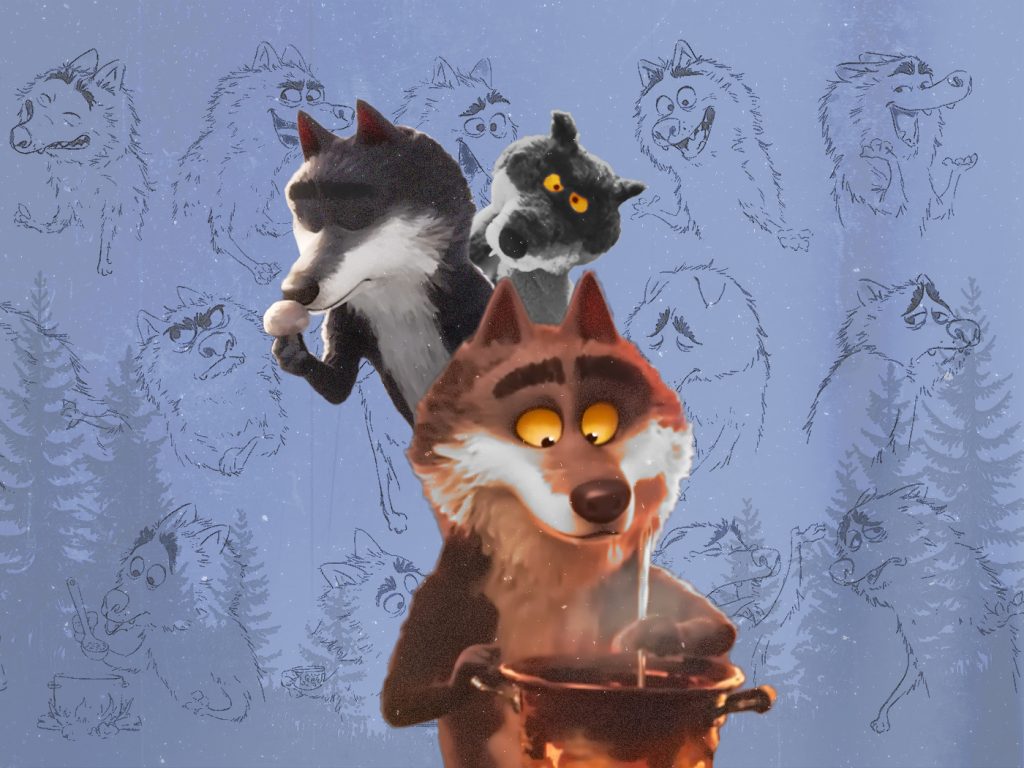
Around a week ago, an animated ad for Intermarché, a French supermarket chain, unexpectedly took Twitter and the worldwide web by storm. Le Mal Aimé (The Unloved) is a Christmas-themed story that light-heartedly toys with the myth of the big bad wolf.
Within days of its early December debut, the ad has become a global phenomenon, racking up hundreds of millions of views and inspiring international praise, fan art, and emotional posts from audiences who say the wolf’s journey echoes their own struggles with belonging.
The spot, only 2:30 minutes long, opens and closes with a live action family on Christmas Eve. A little boy gets gifted a plush wolf, but is frightened. “He’s scared of wolves,” the mother scolds the unaware uncle, who then embarks on telling his nephew a fairytale…
The viewer is now taken to an animated snowy storybook world where Christmas preparations are in full swing, and a wolf reigns supreme. But being Croesus of the food chain does not necessarily go hand in hand with being popular, and we discover a wolf, apparently named Albert, who is tired of being unloved.
After a brave hedgehog presents him the novel possibility of eating carrots, mushrooms, fruits, or vegetables instead (all of which, of course, can be found at Intermarché), the wolf gradually abandons his meat-eating disposition to become vegetarian. Actually, Albert only becomes pescatarian as he, curiously enough, continues to enjoy fish.
With the assistance of his hedgehog mentor, the formerly feared predator ultimately gains acceptance from the other animals (except the unconscious fish), whom he had previously been accustomed to hunting down.
The spot ends with a return to the live-action family, where the nephew has conquered his fear and has fallen asleep cuddling the plush wolf. Over the past few days, this plush toy has become so popular on social media that Intermarché has announced that it will produce it for commercial sale.
Lovely forest animals, adorable Christmas decorations and details, and a progressive moral – that there are many healthy alternatives to meat – are the ingredients of this heartwarming Christmas tale, set to the tune of Claude François’ chanson Le Mal Aimé.
I, for myself, am genuinely in awe about how such a short clip (especially being a commercial!) can touch on so many important topics while still cleverly conveying a consumerist message. It elegantly deals with prejudice and tolerance, and the willingness to grow beyond one’s own limitations in order to better oneself for others. Thus, the ad strongly resonates with one of my all-time favourite personal mantras: What you give to the world, you shall receive.
After seeing the clip initially, my immediate reaction was to deeply identify with the wolf, who had shown himself vulnerable, imperfect, but also persistent and adaptable.
I forwarded the video directly to a female friend with whom I had recently cooked vegetarian curry, thus learning to overcome my own meat overdependence, texting: “I am the wolf🐺;)” Beautifully, she responded: “Aww, mega cute. And that’s a good path you want to take as a wolf 🙂 Supportive!”
In a sense, probably every true soul out there can somehow connect to the wolf Albert, who went out of his way to become a better co-inhabitant, earning the trust and companionship of the forest animals in return.
The Mechanisation of Art
But the commercial and its surrounding hype also show that people, more than ever, are starving for novelty and authenticity in entertainment. This holds particularly true at a time when Western pop culture, driven by a nostalgic and not-so-unfounded cultural pessimism and a profit-driven aversion to risk, is desperately clinging to the well-known content of the past.
How else to explain the cultural endless loop in which we are increasingly trapped, represented, among other things, by the sheer endless reheating of cinematic franchises, some of them several decades old?
Even more worrying, one of Le Mal Aimé’s hallmarks is that it is not actually AI-generated. This is important because the billion-dollar companies Coca Cola and McDonald’s recently released two grotesque Christmas commercials that were entirely AI-generated and were, rightfully so, widely mocked for their bland and mechanical soullessness.
Whereas Coca Cola praised itself for saving on labour costs and doubled down with an ingenious fake behind-the-scenes of its festive ad, McDonald’s showed more sense of shame and deleted its spot.
While this gives hope that shaming big companies for relying on AI might work in the long run, the US-dominated Western entertainment industry is moving towards a heavy use of AI in its content production. For example, Netflix and YouTube are said to be developing feedback systems in which 5-20% of their content will be automatically generated based on viewer metrics.
No creators of flesh and blood are needed for this process, as the “work” of generating mimicked AI-slop is placed in the hands of the conglomerates and monopolies at the top of the ladder. Therefore, not only is there a threat of an ongoing decline in the originality and novelty of video content, but also of a sharp decline in the human creativity involved in it. Yikes. The Dead Internet Theory threatens to become reality.
200% of the Emotion Card: The Quest for Defending Human Imagination
Due to the market power of these corporations, a customer revolt may prove difficult, though. Decades of neoliberal hegemony have made its dogmas of cost optimization, blind and teleological faith in technology, and user-targeted hyperindividualization quite strong. The notion of the consumer who can dictate the market may once again prove to be a neoliberal myth.
At a time when Western corporations, in the absence of innovation, manufacturing, and thus real-world output, seek to financialize and monetize our everyday social interactions, now including our relationship with man-made art, the celebration and preservation of genuine pieces of human creativity, such as Le Mal Aimé, thusbecomes imperative.
Intermarché’s likeable wolf already is a stark symbol against these dystopic developments as its creators went the exact opposite way of Coca Cola and McDonald’s.
For Le Mal Aimé, three different production companies joined forces, with Montpellier-based Illogic Studios alone having some 70 people working for more than six months on the 3D animated core of the tale. The behind-the-scenes content shows the immense artistic effort that went into telling Albert’s story, putting today’s “AI creators” to shame.
According to Intermarché’s brand and communication director, the supermarket brand wanted to “play 200% of the emotion card.” This was achieved resoundingly as Le Mal Aimé is overflowing with creative affection and adorable details, such as the wolf putting on his reading glasses while cooking or wagging his tail excitedly as he arrives for the final Christmas dinner.
Consequently, the peaks of man-made cultural authenticity, imagination, and distinctiveness are to be found in breathing creative spaces and interspaces and will never be achieved through the logic of efficiency and the outsourcing of the creation process to soulless machines.
Our species is degraded to hollow consumers when corporate balance sheets become an end in themselves rather than a means to a good life for the many, benefiting mainly large corporations and, in turn, the richest.
In all likelihood, Intermarché’s Christmas ad was anything but cheap in monetary terms, but it was highly effective in touching its viewers’ hearts and captivating audiences around the world.
In the end, what does it say about our cultural epoch when an ad, albeit a brilliant, high-quality and overall outstanding one, is one of the most artistically genius things to come out in recent memory? Probably nothing promising.
However, Intermarché’s wolf Albert and his moving change of heart and the hype around the clip should be regarded as a shining ray of hope that the many people are still and will hopefully always be starving for and celebrating genuine human creativity.
(If you enjoyed the text please leave a like!)
